When PlayStation Became a Playground for Contrasts
A look at how PlayStation’s catalog bridged arcade spectacle, fighter depth, and slow-burn world-building in one remarkably varied era.
A console defined by range
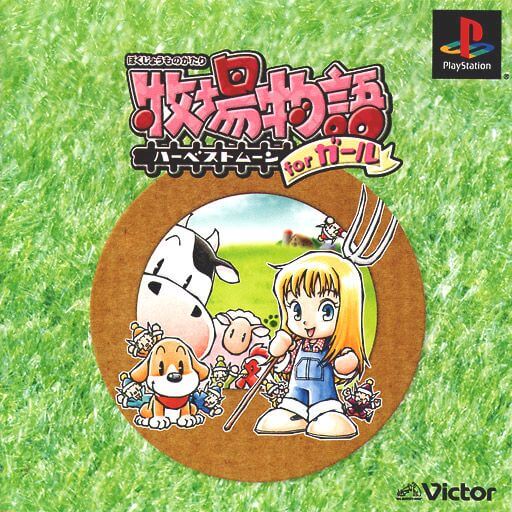
One of the most striking things about the PlayStation library is how little it behaves like a single genre identity. In the same catalog window you can move from the speed and spectacle of Hydro Thunder to the expressive combat systems of Guilty Gear, then pivot again into the rural routine of Harvest Moon: Back to Nature for Girl. That range is not just a matter of variety for its own sake. It shows a platform where different design philosophies could coexist without one erasing the others, and where players were invited to care equally about reflexes, systems, and atmosphere.
This breadth also helps explain why the PlayStation became such a durable home for imported ideas and genre experimentation. Capcom brought over the flamboyant tag-team rhythm of Marvel vs. Capcom: Clash of Super Heroes, while Namco used Klonoa: Door to Phantomile to explore a more whimsical, adventure-driven take on platforming. Elsewhere, Adeline Software International adapted Little Big Adventure into a story of escape and resistance, and Marvelous Interactive offered a farm life role that centered patience and relationship-building. The platform’s identity, in other words, was not fixed by a single flagship formula. It was built from the friction and overlap between many.
Arcade energy, translated rather than copied
The most obvious thread running through this shortlist is the arcade impulse: the desire to make a game feel immediate, readable, and thrilling in the first minute. Hydro Thunder captures that instinct through high-speed boat racing across tracks filled with hazards, a structure that prizes momentum and quick recovery. The appeal lies not only in finishing first, but in mastering the feel of a route under pressure, learning where the danger lurks, and unlocking new boats as a reward for persistence. On PlayStation, that kind of design mattered because it gave console players a taste of arcade escalation without asking them to memorize an overwhelming amount of narrative or context.
The same spirit appears in the combat spectacle of Marvel vs. Capcom: Clash of Super Heroes. Here, the thrill comes from pairing iconic fighters, chaining advanced combos, and triggering screen-filling special attacks that turn each battle into a burst of movement and color. The game’s structure encourages aggression and improvisation, but it is also a game of composition: choosing a pair, thinking about synergy, and learning how to convert a hit into a decisive sequence. That emphasis on momentum aligns it with arcade sensibilities, yet the home-console setting invites longer practice and deeper mastery than a cabinet often could.
Even Guilty Gear pushes in a similar direction, though with a different tone. Rather than relying on crossover recognition or licensed spectacle, it leans into intensely technical 2D fighting, with characters wielding unique weapons and special moves designed to drain the opponent’s health bar. Arc System Works makes precision itself part of the appeal: spacing, timing, and character familiarity become the real currency. When placed beside Marvel vs. Capcom: Clash of Super Heroes, it becomes clear that PlayStation fighters were not all trying to do the same thing. Some sought the rush of big gestures; others drew players in through mastery, frame-by-frame confidence, and the long climb from novice to expert.
Stories that ask for patience
If the racing and fighting games on this list often speak through speed, the more adventure-oriented titles speak through accumulation. Klonoa: Door to Phantomile uses the Wind Bullet ability to grab enemies and solve platforming challenges, but the hook is not merely mechanical. The dreamlike setting of Phantomile and the goal of rescuing the captured princess of the Moon Kingdom give the action a fairy-tale frame, which helps the game feel airy and emotionally distinct. The mechanics are tightly bound to the world: movement, puzzle-solving, and progression all flow from the same imaginative premise, making the platformer feel more like a guided dream than a linear obstacle course.
Little Big Adventure approaches adventure from the opposite direction, grounding its appeal in structure, personality, and a clear sense of purpose. Twinsen’s escape from prison and campaign against the dictator Dr. Funfrock give the game an overtly rebellious spine, but its four behavior modes matter just as much as its plot. Those modes turn exploration into a deliberate act, asking the player to switch mental gears in order to negotiate the world, solve puzzles, and fight enemies. That kind of design rewards observation and adaptation rather than raw speed, and it is one reason the game stands out in a catalog otherwise crowded with immediate-action genres.
The lesson shared by both games is that the PlayStation could support a slower rhythm without losing momentum. Not every memorable title had to be built around a scoreboard, a combo meter, or a chase for the fastest lap. Some games found their identity in curiosity, in the pleasure of understanding systems one step at a time, and in the emotional texture of a journey. Namco and Adeline Software International each used the platform to make players linger, interpret, and commit to a world rather than merely conquer a sequence of stages.
Everyday progression as a design statement
The deepest counterpoint to the arcade titles may be Harvest Moon: Back to Nature for Girl. Instead of a tournament bracket or a time trial, the game begins with inheritance: a young woman takes over a run-down farm and must restore it through farming, animal care, and friendship. That premise shifts the player’s attention from short-term victory to long-term stewardship. Success is not just about efficiency, but about settling into a rhythm of responsibility and making the farm part of a larger social world in Mineral Town.
What makes this especially interesting in the context of PlayStation is how sharply it redefines accomplishment. In a fighting game, improvement is often visible in faster reactions and cleaner execution. In a racing game, it might mean shaving time from a course or learning a shortcut. In Harvest Moon: Back to Nature for Girl, improvement is measured through renewal. A neglected space becomes productive. A solitary routine becomes embedded in a community. Even the act of forming friendships matters as part of the core loop, not as decorative flavor. That makes the game feel quiet but not small; its stakes are domestic, but the design ambition is significant.
Seen alongside the other titles here, Marvelous Interactive’s game broadens the picture of what a PlayStation game could ask from its audience. It could ask for dexterity, as in Hydro Thunder. It could ask for tactical aggression, as in Marvel vs. Capcom: Clash of Super Heroes. But it could also ask for consistency, empathy, and time. That willingness to value routine as much as adrenaline helped the platform speak to players who wanted their games to last beyond the excitement of the first session.
Technology, style, and the feel of mastery
What ties these releases together is not just genre but the way each one frames mastery. In Guilty Gear, mastery is about learning a technical language of movement and offense, where each character’s special moves and weapons create distinct possibilities. In Marvel vs. Capcom: Clash of Super Heroes, mastery takes the form of team construction and combo expression, with the screen becoming a stage for rapid decisions and dramatic payoff. In Hydro Thunder, mastery emerges through track knowledge and control under pressure, especially as hazards, turbo, and vehicle choice shape the race. The details differ, but each game makes skill visible.
That visibility is part of why these games remain so legible in hindsight. A player watching a race, a combo, or a platforming sequence can usually identify what is at stake and what success looks like. Klonoa: Door to Phantomile communicates through the logic of grabbing, carrying, and using enemies in ways that are easy to understand but satisfying to refine. Little Big Adventure layers its identity through behavior modes that give the player a clear vocabulary for problem-solving. Even the more obscure Kiganjou, with its treacherous Japanese castle, projectile attacks, waves of enemies, and bosses leading toward a final chamber, follows a simple arc of escalation that fits the broader pattern: learn the rules, endure the pressure, and push onward.
This shared clarity matters because it makes the PlayStation catalog feel approachable without making it shallow. The platform did not need every game to be mechanically identical in order to make player expertise feel rewarding. Instead, it offered many kinds of legible challenge. A racing game could test line choice and reflexes. A fighter could test composure and combination sense. A platformer could test timing and spatial understanding. A life sim could test patience and prioritization. The diversity of these demands is what gave the system its cultural staying power, and it is why a shortlist like this can feel less like a random sample than a map of the era’s design ambitions.
Why this PlayStation moment still matters
Looking back, this collection suggests that the PlayStation’s legacy is not just that it hosted many famous games, but that it normalized multiplicity. The machine was home to blockbuster action, technical fighters, experimental platforming, narrative adventure, and lifestyle simulation, often side by side. That meant players could move through the library according to mood rather than obligation. One weekend could belong to the speed of Hydro Thunder, another to the precision of Guilty Gear, and another to the slower, restorative arc of Harvest Moon: Back to Nature for Girl. A platform that can hold all three without contradiction becomes more than hardware; it becomes a cultural meeting place.
This is also why the individual personality of each developer matters. Midway delivered a racing game built around arcade thrill. Capcom translated a crossover fighter into a home-console spectacle. Namco shaped a dreamlike platform adventure. Marvelous Interactive framed farm life as meaningful progression. Arc System Works pursued technical 2D combat with a distinct mechanical voice. None of these efforts collapse into a single trend, yet together they show a platform thriving on variety and authorship. The PlayStation era was not merely about abundance; it was about the confidence to let different kinds of design flourish in public view.
That may be the most enduring lesson from this shortlist. Great catalogs are not remembered only for the most famous names, but for the way they preserve contrasts that make an era legible. The presence of Little Big Adventure next to Marvel vs. Capcom: Clash of Super Heroes, or Klonoa: Door to Phantomile next to Harvest Moon: Back to Nature for Girl, shows a console culture comfortable with both spectacle and subtlety. That balance is what gives PlayStation retrospectives their staying power: not a single defining mood, but a richly layered one.