Between Ruins and Runes: The SNES RPGs That Turned Ambition into Identity
A look at how a small cluster of SNES role-playing games used parties, maps, rival seekers, and unusual settings to push beyond standard fantasy.
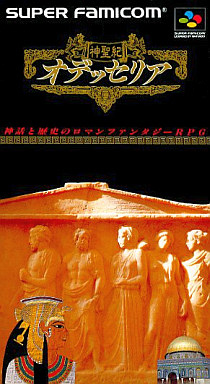
The SNES as a Laboratory for RPG Identity
The Super Nintendo era is often remembered for a few headline adventures, but its role-playing library was also a place where developers tested how far the genre could stretch without losing its core appeal. Within this catalog shortlist, that experimentation is immediately visible. Shinseiki Odysselya, Shinseiki Odysselya II, The 7th Saga, Wizap! Ankoku no Ou, Verne World, and Solid Runner all sit under the broad umbrella of turn-based or tactical play, yet each frames that structure through a different kind of world, journey, or conflict. That variety matters because it reveals an era when RPG fans were not only looking for long campaigns, but for distinct ideas about what a campaign could be.
What makes this group especially interesting is the way it blends familiar systems with unusual settings. Vic Tokai’s Shinseiki Odysselya sends players across a futuristic world in ruin, while its sequel, Shinseiki Odysselya II, shifts the journey into a fantasy realm. Produce! takes The 7th Saga in a more openly competitive direction, asking the player to race rival seekers for magical runes. ASCII Entertainment’s Wizap! Ankoku no Ou leans into surreal non-linearity, and Banpresto’s Verne World builds its appeal around a Jules Verne-inspired adventure tone. The result is less a single genre statement than a compact map of design ambition.
Ruin, Rebirth, and the Appeal of World-Building
One of the strongest threads connecting these games is their use of setting as more than decoration. In Shinseiki Odysselya, the player travels through a society that has fallen into ruin, guiding a party through strategic battles while balancing character skills and progression. That premise is classic RPG material, but the emphasis on a broken future gives the journey a particular emotional texture. Exploration is not just about reaching the next town or dungeon; it is about moving through a civilization that already failed and trying to understand what can still be recovered from it.
By contrast, Shinseiki Odysselya II moves to a fantasy realm while retaining the same broad focus on party management and tactical turn-based combat. On paper, that sounds like a standard sequel adjustment, but it also suggests a conscious change in atmosphere. Fantasy worlds invite different expectations: less mechanical decay, more mythic structure, and often a clearer relationship between characters and place. Placing these two games side by side highlights how the same developer, Vic Tokai, could use the SNES role-playing format to explore both post-collapse science-fiction and more traditional fantasy adventure without abandoning the strategic backbone that defined the experience.
The same attention to setting shows up in more eccentric form elsewhere in the shortlist. Verne World channels a Jules Verne-inspired imagination into top-down exploration, inventory management, and puzzle solving. That combination gives the game a literary flavor that is unusual even by the standards of the era. Instead of relying solely on combat escalation, it appears to derive momentum from discovery, object handling, and narrative progression. Meanwhile, Wizap! Ankoku no Ou embraces a surreal, non-linear world in which the quest to defeat the Dark King is shaped as much by exploration-driven puzzle solving as by turn-based battles. These are games that use their worlds to define their identities before the battle systems even begin to speak.
Party Structure and the Drama of Progression
If setting gives these games their personality, party composition and progression give them their rhythm. The SNES era RPG often thrives on the simple pleasure of watching a group become stronger over time, but this shortlist shows that the formula can branch into very different forms. In Shinseiki Odysselya and Shinseiki Odysselya II, players oversee a party of adventurers and advance through tactical turn-based battles. That description already implies a degree of planning: who contributes in battle, how skills develop, and how a party’s growth affects what the player can attempt next. The appeal is not merely in the fights themselves, but in the long-term sense that a team is being shaped into a functioning unit.
The 7th Saga pushes this further by making competition part of the structure. Choosing one of seven apprentices and traveling across the kingdom of Ticondera in a race to gather seven magical runes changes the emotional tone of progression. Instead of only comparing the player’s growth against the environment, the game also frames advancement against rival seekers pursuing the same goal. That simple idea can transform ordinary RPG pacing into something more anxious and strategic. Every step forward is a step taken in the shadow of other travelers, which turns the familiar grind of levels and battles into a broader contest of timing and endurance.
The mechanical focus also varies according to the kind of unit the player controls. In Solid Runner, the central fantasy is not a party of heroes but a customizable mechanical suit moving across grid-based maps. That shift matters because it relocates RPG-style progression from individual characters to a combat machine, and from journey-based narrative to mission-specific objectives. Instead of asking how a cast grows together, the game asks how a customized unit performs under changing conditions. Even without assuming details beyond the catalog, that already places Sting Entertainment’s game in a different branch of the tactical family tree: one that values adaptability, positioning, and objective play as much as story-driven escalation.
Exploration as Structure, Not Just Scenery
Another common trait in this shortlist is the importance of moving through space with purpose. Many retro RPGs are remembered for combat loops, but these games show how exploration can become the real organizing principle. Wizap! Ankoku no Ou is explicitly described as combining turn-based battles with exploration-driven puzzle solving, and that pairing suggests a game where the route forward may be as important as the enemy standing in it. The mention of a surreal, non-linear world also implies that players are not simply being funneled from one scripted event to the next. Instead, they are likely asked to read the environment, interpret its logic, and accept that progress may depend on understanding how the world is arranged.
That same emphasis appears in a more grounded form in Verne World, where top-down environments, inventory management, and puzzle solving work together as the main verbs of play. Even without a combat-heavy description, the structure sounds recognizably RPG-adjacent because it asks the player to inventory objects, solve problems, and keep the narrative moving. The Jules Verne-inspired presentation likely gives those mechanical routines a sense of wonder, but the underlying appeal is more practical: the satisfaction of combining items, discovering routes, and making sense of spaces that reveal themselves gradually. In that sense, the game belongs to a category of adventures where curiosity is a system, not just a mood.
This is where the SNES hardware era becomes particularly significant as an archival theme, because these games were all designed for a generation of players who expected maps, menus, and spatial memory to matter. The 7th Saga relies on a kingdom-wide race. Shinseiki Odysselya and Shinseiki Odysselya II depend on the movement of a party through a larger story world. Solid Runner structures itself around grid-based maps and mission goals. Each one uses traversal as a meaningful part of identity. They do not simply present exploration as downtime between battles; they treat movement as a way to define strategy, tension, and pacing.
How the Developers Shaped Familiar Systems into Distinct Voices
A feature like this would be incomplete without acknowledging the developers behind the games, because the shortlist is a reminder that shared genre vocabulary does not erase authorship. Vic Tokai appears twice here, and that alone makes Shinseiki Odysselya and Shinseiki Odysselya II especially valuable for comparison. The two games belong to the same broad tactical role-playing lineage, but the first is built around a futuristic world in ruin while the second moves into fantasy. That contrast suggests a studio willing to work within the expectations of the SNES RPG audience while still experimenting with theme and atmosphere. It is a useful reminder that a sequel can preserve structure while re-tuning the emotional register of an entire adventure.
The other developers in the shortlist each point to a different kind of design intent. Produce! uses the competitive framing of The 7th Saga to distinguish itself from more linear quest structures. ASCII Entertainment seems to favor oddity and non-linearity in Wizap! Ankoku no Ou, where puzzle-solving and turn-based combat coexist in a surreal quest. Banpresto’s Verne World takes an inspiration from literary adventure and translates it into a top-down playable journey. Sting Entertainment then shifts the tactical emphasis toward a customizable machine in Solid Runner, which points to a more mission-oriented and system-focused approach.
Taken together, these games show how a platform can host many versions of the same genre without flattening them into sameness. That is one reason the SNES remains such a fertile archival subject. It was not merely a machine for colorful fantasy epics; it was also a place where developers could find different ways to make turn-based combat feel urgent, exploration feel meaningful, and progression feel personalized. The catalog records here do not tell us everything, but they do tell enough to show a landscape where a party of adventurers, a lone apprentice, a mechanical suit, or a curious explorer could each lead to a different emotional contract with the player.
Why These Games Still Matter as a Group
Viewed individually, each of these titles has its own appeal. Viewed together, they form a small but revealing portrait of what SNES-era role-playing could become when developers allowed theme, structure, and pacing to pull in different directions. Shinseiki Odysselya and Shinseiki Odysselya II demonstrate how a party-based, tactical framework can support both ruin and fantasy. The 7th Saga shows that competition can be built directly into the journey. Wizap! Ankoku no Ou and Verne World remind us that exploration and puzzle-solving can be the main event. Solid Runner demonstrates how tactical systems can be refit around machines and objectives rather than standard heroics.
There is also a broader editorial lesson here for anyone studying retro libraries through catalog records. Genre labels are useful, but they are only the beginning of interpretation. The more interesting question is how a game uses a shared format to create a different mood of play. Does it invite rivalry, as The 7th Saga does? Does it ask the player to decode an unfamiliar world, as in Wizap! Ankoku no Ou? Does it make exploration feel literary, as Verne World appears to do? Or does it use party management and battle strategy to frame a recovery from collapse, as Shinseiki Odysselya does? Those distinctions are exactly what preserve a game’s identity long after the era’s broad trends have faded into nostalgia.
For Classic Game Base, that is the value of a shortlist like this one. It is not simply a list of role-playing games on SNES. It is a cross-section of ideas about how to motivate the player: with ruins, runes, rivals, surreal spaces, inventory puzzles, or mission grids. In a market that often rewards familiarity, these games each found a way to make the familiar feel specific. That specificity is what makes them worth revisiting now, not only as artifacts of a hardware generation, but as examples of how design identity can emerge from the smallest shifts in premise and structure.