Monster Battlers and Handheld Experimentation on Game Boy Advance
A look at how the Game Boy Advance became a testing ground for creature collection, action-adventure revival, and unusual RPG twists.
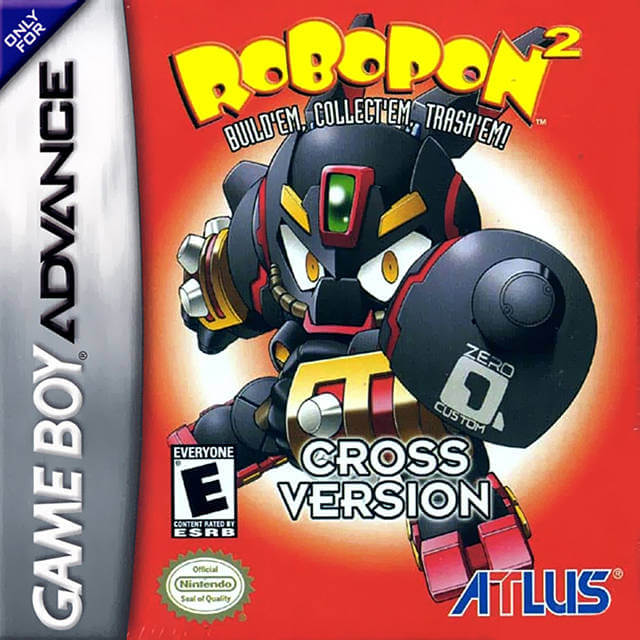
A handheld built for reinvention
The Game Boy Advance was never just a home for scaled-down console ideas. It was also a machine that encouraged developers to rethink familiar genres for shorter play sessions, sharper interfaces, and a screen that demanded clarity in every moment. The catalog shortlist here shows that tendency vividly: creature-collecting RPGs, action-adventure revivals, and hybrid designs all found room on the platform, each trying to make the most of its portable format. Rather than chasing one defining style, these games turned the handheld into a laboratory for adaptation.
What makes this lineup especially interesting is the range of design philosophies packed into it. Red Company used the platform for two branches of the same monster-battling concept in Robopon 2: Cross Version and Robopon 2: Ring Version, while Orbital Media pushed the GBA toward moody science-fiction action in Scurge: Hive. Elsewhere, Ultimate Play the Game revived an old adventure identity in Sabre Wulf, and Ubisoft brought a familiar mascot platformer spirit to Rayman Advance. Each game approaches the same hardware from a different angle, yet all of them depend on the GBA’s compactness and immediacy.
That variety matters because handheld libraries are often remembered through a few dominant genres, especially role-playing games and platformers. This selection suggests something broader: the GBA was also a space where developers could condense systems, reframe exploration, and make long-form ideas feel approachable in short bursts. Even the most traditional entries here contain an undercurrent of experimentation, whether through split versions, creature customization, infection management, or puzzle-driven adventure. The result is a snapshot of a platform that rewarded ambition as much as familiarity.
Creature collecting with a mechanical twist
Among the most striking examples in the shortlist are the two linked versions of Robopon 2: Cross Version and Robopon 2: Ring Version. Both revolve around guiding a player character through the land of Porombo, capturing and customizing robotic creatures known as Robopons, and using them in turn-based combat. That framework may sound recognizable to anyone familiar with monster-catching RPGs, but the mechanical premise gives the series a slightly different texture. Robots imply parts, upgrades, and a more modular sense of growth, which the description reinforces by noting that players gather parts and use them to improve their machines.
This emphasis on customization is important because it gives the games a practical identity beyond simple collection. If the goal were only to fill a roster, the experience might resemble many other creature battlers. Instead, the Robopon concept suggests a loop built around assembling a team and then tuning it, making battle not just a test of strength but a reflection of the player’s investment in tinkering. On a handheld system, that kind of structure is especially well suited to repeated play. You can make progress in relatively small steps, then return later with a more refined squad and see how the changes affect combat.
The existence of two versions also adds a familiar but effective layer of replay value and conversation around the series. Version splits have long been part of creature-collection design, and here they hint at a social and comparative dimension without requiring any elaborate systems to explain it. The important point is that the games ask players to think about their teams in terms of composition, parts, and tactical use. That makes Red Company’s approach feel both aligned with the genre’s conventions and distinct in its emphasis on robotics over biology, a small shift that can change the entire tone of collection and battle.
A darker route through the handheld RPG
If the Robopon pair highlights playful system-building, Scurge: Hive pushes the Game Boy Advance toward a very different mood. In this game, players control bounty hunter Jenosa Arma as she moves through an infected research facility and fights back against the biological Scurge menace. The setup is immediately more confined and urgent: instead of roaming a cheerful world full of collectible companions, the player is trapped inside a place that is actively under threat. That setting alone gives the game a strong identity, but the description also points to a specific mechanical hook in infection management, which suggests pressure layered onto the usual action challenges.
The combination of isometric shooting and infection management is what makes the game stand out in this shortlist. Action games on handhelds often succeed by being direct, readable, and responsive, but adding a persistent biological threat changes the tone. The player is not simply clearing rooms; they are managing a condition while advancing through a hostile facility. Even without expanding beyond the supplied record, that idea implies a game that balances aggression with caution, forcing attention to both movement and survival. On a platform with limited screen space, an isometric perspective can help organize that tension in a way that feels deliberate rather than chaotic.
What is especially notable is how strongly Orbital Media’s game contrasts with the more traditional RPG structure of the Robopon titles. Both are built around progression, but they imagine that progression differently. In one, advancement comes through collection and upgrade; in the other, it comes through pushing deeper into danger while dealing with an encroaching infection. Together they show how the GBA could support not only broadly similar genre ideas but also entirely different emotional tones. One asks you to optimize a team, the other to endure a hostile environment. That range is a large part of the handheld’s appeal.
Adventure heritage reworked for a small screen
The shortlist also includes Sabre Wulf, a reminder that the Game Boy Advance was often used to revisit older game identities rather than invent new ones from scratch. Here, players guide Sabreman through a dangerous jungle, solve puzzles, and use captured creatures to recover stolen artifacts. The description frames it as an action-adventure game, but the specific ingredients matter: jungle exploration, puzzle-solving, and creature interaction all point to a more deliberate pace than a simple run-and-jump platformer. That makes it feel like a handheld reinterpretation of exploration-heavy design rather than a pure nostalgia piece.
There is a strong sense in this type of game that the handheld format can strip away excess and focus attention on navigation and problem-solving. A jungle setting naturally supports that, since dense environments, hidden routes, and dangerous encounters can all be understood quickly on a portable screen. The use of captured creatures as part of the solution further suggests a design that wants players to think about tools and context, not just reflexes. In that sense, the game fits neatly into a broader GBA trend: taking a recognizable adventure template and condensing it into something that can be approached in flexible, manageable sessions.
The name Ultimate Play the Game carries its own historical resonance, but even without leaning on outside context, the supplied record makes the game’s editorial interest clear. It is a work about recovery, traversal, and the use of acquired abilities to reclaim what has been lost. That structure mirrors a common handheld strength: the satisfaction of steady progress through compact stages or regions. For players, the appeal is not merely in the jungle theme but in the way the game turns exploration into a sequence of readable objectives that can be pursued over time.
Mascot polish and platformer familiarity
Where Sabre Wulf leans into adventure puzzles, Rayman Advance represents another important GBA instinct: taking a known franchise identity and translating it into a portable platformer that still feels vivid. The description places the limbless hero across six colorful worlds in a quest to save the Great Protoon and his Electoon children from Mr. Dark. That setup is simple on its face, but it promises the kind of steady progression and visual variety that handheld platformers depend on. The GBA was a natural home for this sort of structure because each new world can serve as a compact, distinct chapter.
The enduring appeal of a game like this lies in its readability. Players can understand the goal immediately, then move from one environment to the next with a clear sense of momentum. On a portable device, that matters more than ever. A game does not need to explain itself endlessly if its world structure and objectives are easy to grasp, and the description of Ubisoft’s release suggests exactly that kind of directness. It is a journey defined by contrast between colorful worlds and a villainous threat, with the player’s task reduced to a satisfying and familiar sequence of movement, rescue, and confrontation.
In a lineup full of customization, infection systems, and versioned monster games, Rayman Advance provides balance by standing on the clearer end of the spectrum. That does not make it less interesting; it makes it useful as a reminder that the Game Boy Advance thrived on accessibility as much as complexity. Some players wanted a system-heavy RPG they could pick apart over weeks. Others wanted a vibrant platformer with a straightforward mission and a sense of motion through distinct worlds. The handheld could accommodate both, and that flexibility is part of why its library remains so varied and durable.
What this shortlist says about the platform
Taken together, these games show the Game Boy Advance as more than a repository for child-friendly icons or simplified console ports. It was a place where developers could compress long-form ideas into mobile-friendly forms without losing ambition. Monster collecting could be about robots and upgrades rather than only fantasy creatures. Action games could become infection-management survival exercises. Adventure revivals could emphasize tools, puzzles, and recovery. Platformers could remain colorful and approachable while still carrying a strong sense of world progression. That diversity is the common thread linking the shortlist.
The most interesting part of that diversity is how often it relies on small but meaningful shifts in structure. Robopon 2: Cross Version and Robopon 2: Ring Version introduce mechanical customization into a familiar capture-and-battle formula. Scurge: Hive reframes action through infection. Sabre Wulf uses captured creatures to support adventure goals. Rayman Advance keeps the platforming readable by breaking its journey into six colorful worlds. None of these changes is enormous in isolation, but together they demonstrate how handheld design often depends on focused innovations rather than sprawling reinvention.
That may be the real lesson of the GBA era captured here. A portable system does not force developers to think smaller; it forces them to think more sharply. The best games in this shortlist are concise in premise but not in intent. They ask a player to collect, upgrade, survive, explore, or rescue, then build a loop around that verb until it feels natural. Whether the result is a robotic battler, an isometric sci-fi struggle, a jungle adventure, or a vivid platformer, the underlying achievement is the same: turning limited hardware into a stage for distinct, memorable design identities.